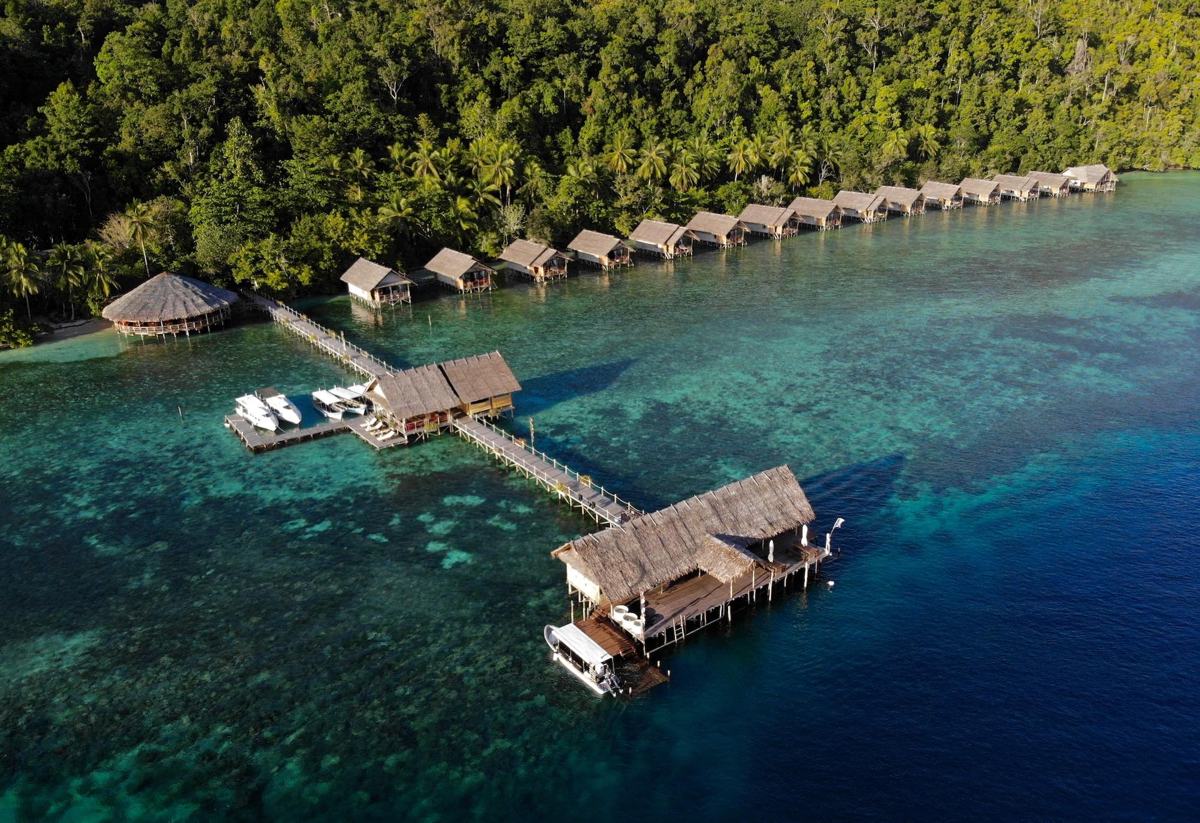
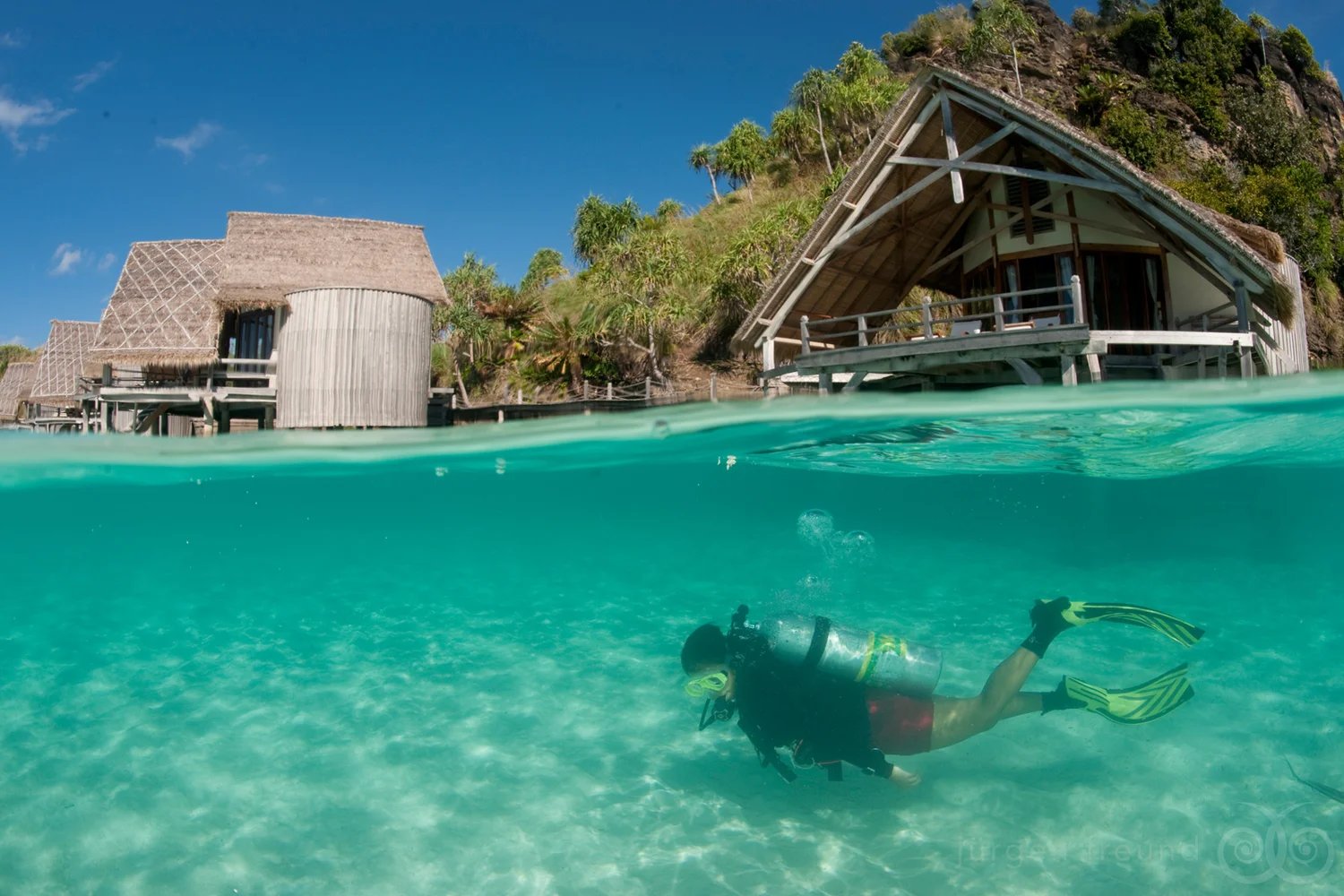
Raja Ampat, off the western tip of New Guinea in Southwest Papua, sits at the heart of the Coral Triangle and holds more recorded species of hard coral and reef fish than anywhere else on the planet. Dives range from soft-coral-covered walls and seamounts patrolled by wobbegong sharks to manta cleaning stations and mangrove channels where corals grow in the shallows.
The archipelago covers more than 1,500 islands, so operators are spread out: some are boutique eco-resorts on private islands, others are liveaboards that move between the Dampier Strait, Misool and the remote north. October to April usually brings the calmest seas.
Getting here takes time (most trips start with a flight to Sorong), so it pays to compare operators carefully. Every diver also needs a Raja Ampat marine park entry tag.
When to go and what it costs: July to early September is the windiest, roughest period, especially in the south around Misool, while June and September are shoulder months. Manta season in the Dampier Strait runs roughly November to April, visibility is often best in November and February–March, and September–October brings big bait-fish schools and mobula rays. Water is a warm 26–28°C all year, so a 3 mm suit is usually enough. Expect remote-resort prices: most resorts sell multi-night dive-and-stay packages rather than single dives, and Misool Resort's 7-night stays start from about USD 4,940 per person sharing before dive packages. Several listed resorts include Nitrox free for certified divers (Misool, Papua Diving, Papua Paradise and Raja4Divers), and Meridian in Waisai includes rental gear and has no minimum stay, which makes it the most flexible base for short trips. The official marine park entry card costs IDR 700,000 for international visitors and is valid for 12 months; check with your operator whether any additional local fees apply.